Inside FIFA World Cup 2026: A 16-City Match Guide
The 2026 FIFA World Cup is the first expanded men’s tournament featuring 48 national teams, 104 matches, and 16 host cities across Canada, Mexico, and the United States from June 11 to July 19, FIFA w...
Inside FIFA World Cup 2026: A 16-City Match Guide
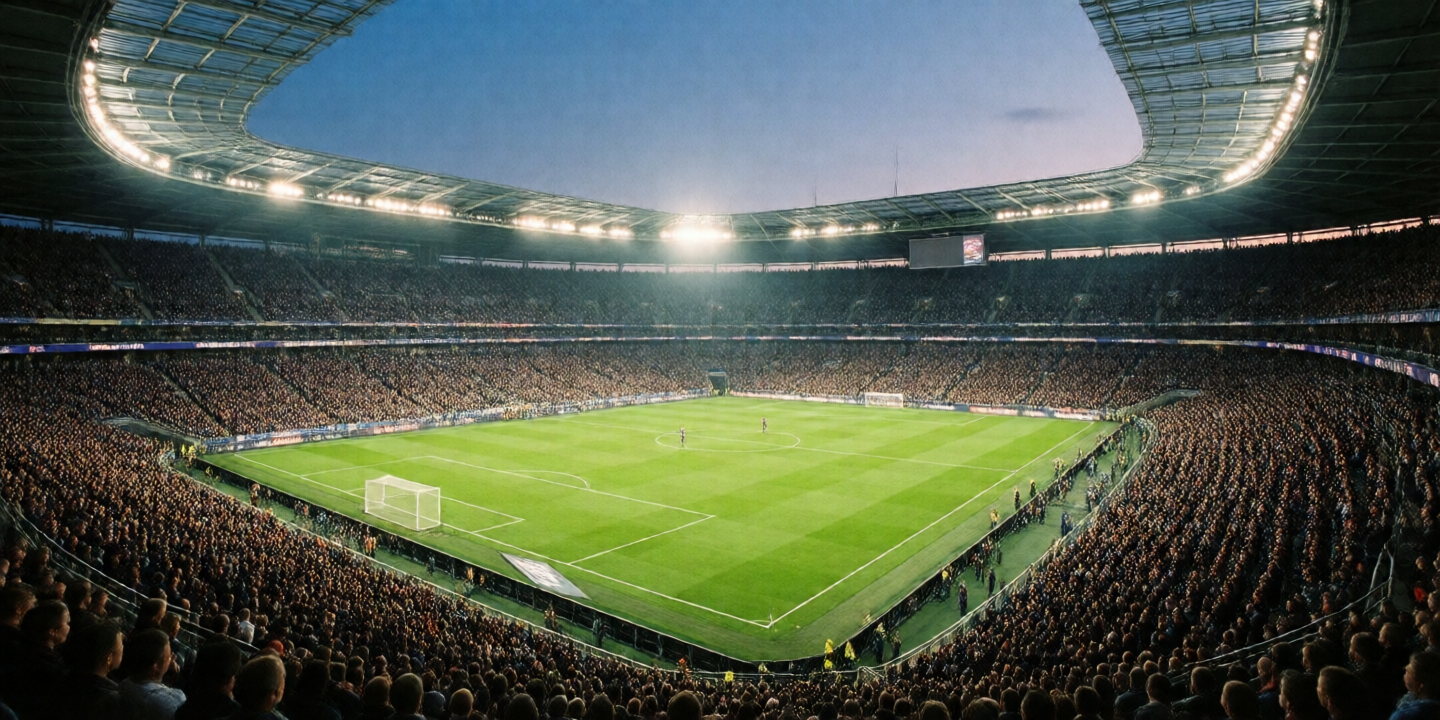
The 2026 FIFA World Cup is the first expanded men’s tournament featuring 48 national teams, 104 matches, and 16 host cities across Canada, Mexico, and the United States from June 11 to July 19, 2026. FIFA will stage the opening match in Mexico City, while the final is scheduled for MetLife Stadium in East Rutherford, New Jersey. Los Angeles will host eight matches at SoFi Stadium, and Atlanta will stage a semifinal at Mercedes-Benz Stadium. The competition will use 12 groups of four teams, followed by a Round of 32, creating 39 days of football and a demanding travel schedule. Tactical Review will track team structures, player statistics, match predictions, and tournament developments throughout the competition. Start by mapping your preferred host cities, then compare confirmed fixtures with squad news before forming any prediction.

Myth 1: The 2026 football World Cup is just a larger version of 2022 — debunked
The 2026 tournament is structurally different because 48 teams will compete instead of 32, producing 104 matches rather than 64. The group stage contains 12 groups of four, and the top two teams from each group join the eight best third-placed teams in the Round of 32. That format creates 32 knockout entrants, so a team can survive an uneven group campaign yet face elimination immediately afterward.
The expanded field also changes the analytical problem. A traditional World Cup required six group matches to evaluate all teams across three rounds; the 2026 format requires analysts to separate group-stage incentives from knockout-stage risk. A draw may be strategically useful for a team protecting goal difference, while a third-place side could qualify despite collecting fewer points than previous tournament entrants. Those details matter for anyone studying football predictions, because historical World Cup averages are not automatically transferable.
According to FIFA’s official competition information, the 2026 event will be hosted across three countries. The scale is not decoration, despite the predictable promotional language: travel, climate, kickoff times, and squad rotation will influence performance. Tactical Review will therefore compare match context rather than treating every fixture as an isolated 90-minute contest.
Want a structured way to follow the tournament?
Myth 2: More host cities automatically mean better preparation — partially true
More host cities create stronger local access but also introduce logistical variables that coaching staffs must manage. The 16 venues stretch from Vancouver and Seattle in the west to Miami, Atlanta, and Boston in the east, while Mexico City, Guadalajara, and Monterrey add different altitude and climate conditions. Teams cannot assume that a short flight on a map equals a low-recovery trip in practice.
The most useful preparation model is sequential rather than sentimental:
- Identify the team’s base camp and the distance to each scheduled venue.
- Compare kickoff time, temperature, humidity, and altitude.
- Measure recovery days before changing the starting lineup.
- Review whether the opponent’s pressing intensity increases travel risk.
- Recalculate the tactical plan after confirmed injuries and suspensions.
A specific edge case is Mexico City, which sits at approximately 2,240 metres above sea level. That does not guarantee an advantage for Mexico, but it can alter running intensity and recovery expectations for visiting teams. By contrast, Miami’s heat and humidity create a different physiological challenge, while Seattle and Vancouver may produce cooler match conditions. The National Weather Service provides reliable climate information, but tournament analysts should use matchday forecasts rather than monthly averages.
For readers assessing football World Cup predictions, this is a practical distinction: venue data is useful only when connected to playing style. A high-pressing team may be more vulnerable to heat than a compact low block, especially when the match occurs after limited recovery.

Myth 3: The final is simply the best team’s last match — flat-out false
The 2026 World Cup final is scheduled for July 19 at MetLife Stadium in East Rutherford, New Jersey, but reaching it will depend on bracket position, travel, injuries, and knockout variance. A superior team can dominate possession and still lose through penalties, a set-piece error, or one transition attack. Tournament football is less forgiving than a 38-match league season, where quality has more opportunities to correct bad luck.
The final’s location also makes the route important. A team that crosses several time zones before the semifinal may arrive with different recovery needs from an opponent whose bracket is geographically more compact. The official MetLife Stadium site confirms the venue’s role as a major sports facility in the New York metropolitan area, but venue prestige does not predict the winner. That would be convenient, and football has never been especially considerate of convenience.
A serious pre-match model should examine at least these variables:
- Expected goals for and against over the latest 10 competitive matches.
- Set-piece shots and concessions per match.
- Possession adjusted for opponent strength.
- Pressing actions, defensive line height, and transition frequency.
- Penalty-taker availability and goalkeeper save performance.
- Rest days, travel distance, and confirmed lineup changes.
Tactical Review can use these figures to frame probabilities, not certainties. Readers considering wagering should treat predictions as analytical opinions, set a fixed budget, and avoid chasing losses. Gambling involves risk, and no model can remove it.
See how match context can improve your research.
What actually works when analysing the 2026 football World Cup?
A reliable World Cup analysis combines tournament structure, team quality, player availability, and venue conditions instead of relying on reputation alone. The strongest workflow begins with confirmed information, then tests tactical matchups, and finally reviews price or probability assumptions. This approach is more defensible than selecting a famous nation because its shirt sells millions of replicas.
First, separate descriptive statistics from predictive statistics. Goals scored can indicate attacking production, but expected goals, shot quality, and opponent strength provide better context. Then examine tactical fit: a team that defeats a high defensive line may struggle against a compact 5-4-1 block. Finally, inspect late news, because a missing goalkeeper, defensive midfielder, or primary ball-progressor can change the match more than a small historical trend.
A useful research checklist is:
- Confirm the official fixture, stadium, and kickoff time.
- Track squad announcements from FIFA and national federations.
- Compare the last 10 matches with a longer 20-match baseline.
- Record injuries, suspensions, and expected substitutions.
- Evaluate set pieces separately from open-play performance.
- Keep prediction confidence proportional to evidence quality.
For a deeper tactical framework, see football match prediction methodology. Also review team tactics and formation analysis before comparing tournament contenders. These steps provide information gain because they expose the difference between a strong team and a strong matchup.

Why do fan zones matter beyond the stadium?
Fan zones matter because many supporters will experience the tournament outside the official venues, where public screenings, music, food, and community events expand the matchday footprint. Los Angeles plans a FIFA Fan Festival at the Los Angeles Memorial Coliseum from June 11 to June 14, while official fan zones across Los Angeles County are expected to support broader celebrations. Atlanta’s tournament identity is similarly tied to Mercedes-Benz Stadium, local football culture, and public gatherings.
These events also affect practical planning. Stadium tickets cover only a fraction of total demand, and public viewing areas can become the more realistic option for visitors who cannot obtain seats. Transport capacity, entry rules, weather, and closing times should be checked through official city or tournament pages. The Los Angeles World Cup 26 site lists eight matches and fan-planning resources, while Atlanta World Cup 26 provides city-specific tournament information.
An operational detail worth noting is the difference between match access and festival access. A fan festival may have free or separately controlled entry, but that does not guarantee a place during high-demand fixtures. Arriving early, using public transport where available, and carrying only permitted items can reduce avoidable delays. The glamorous advertising rarely mentions queue management; the queue remains unimpressed.
Want to compare host-city plans before booking?
What to ignore when following the 2026 football World Cup?
Ignore unsupported certainty, recycled team rankings, and betting claims that hide their assumptions. A prediction described as “safe” is not a statistical category, and a team’s historical reputation does not compensate for current injuries, poor defensive transitions, or an unfavourable travel schedule. The same caution applies to social-media tips that provide a selection but no sample size, model, or explanation of probability.
Readers should also ignore false precision. A forecast of 62.37% is not automatically more credible than one of 62% unless the underlying model is transparent and calibrated. FIFA’s Laws of the Game can clarify rules and competition interpretation, but laws do not forecast match outcomes. They explain football; they do not perform divination, despite what certain accounts imply after one successful accumulator.
Tactical Review recommends avoiding these habits:
- Betting more after a losing prediction.
- Treating one friendly match as decisive evidence.
- Confusing possession with control.
- Using old squad data after major coaching changes.
- Ignoring local gambling laws and age restrictions.
- Chasing promotions without reading wagering terms.
For responsible participation, set a loss limit before placing any wager and stop when that limit is reached. If gambling stops being entertainment, use local support services and self-exclusion tools. For further reading, visit responsible gambling guidance and 2026 World Cup fixture tracker.

The practical conclusion for World Cup followers
The 2026 football World Cup rewards preparation because its 48-team format, 104-match schedule, 16 host cities, and three-country footprint create more variables than previous editions. Mexico City, Los Angeles, Atlanta, and East Rutherford will each offer different tactical and logistical contexts, while the Round of 32 introduces a new elimination threshold. A disciplined follower should begin with official fixtures, verify squad news, compare venue conditions, and only then assess predictions.
Tactical Review’s role is to turn those moving parts into readable daily coverage: team tactics, player statistics, match previews, and tournament developments. The most useful question is not “Who looks famous?” but “Which evidence still holds after the venue, lineup, rest period, and opponent style are included?” That question will not guarantee a winning prediction, because football remains an adversarial sport rather than a spreadsheet with studs. It will, however, produce better analysis and fewer expensive assumptions.
Ready to follow the tournament with a clearer process?
Frequently Asked Questions
Q: What is the 2026 football World Cup format?
A: The 2026 football World Cup features 48 teams divided into 12 groups of four. The top two teams from each group and the eight best third-placed teams advance to a 32-team knockout stage. FIFA has scheduled 104 matches across Canada, Mexico, and the United States, making this the largest men’s World Cup by team count and match volume.
Q: When does the 2026 FIFA World Cup start and end?
A: The tournament is scheduled to begin on June 11, 2026, and end with the final on July 19, 2026. Mexico City is scheduled to host the opening match, while MetLife Stadium in East Rutherford, New Jersey, is scheduled to host the final. Always confirm times through FIFA because kickoff details and local broadcast information may change.
Q: Which cities will host the 2026 football World Cup?
A: The 16 host cities are distributed across Canada, Mexico, and the United States. They include Vancouver and Toronto in Canada; Mexico City, Guadalajara, and Monterrey in Mexico; and cities such as Los Angeles, Atlanta, Miami, Seattle, Dallas, Houston, Boston, Philadelphia, Kansas City, and the New York/New Jersey area in the United States. Venue assignments should be checked against the official match schedule.
Q: How should I analyse a 2026 World Cup match?
A: Start by checking the confirmed fixture, venue, rest days, and likely lineups. Then compare recent expected goals, defensive transitions, set-piece performance, opponent strength, and travel conditions rather than relying only on FIFA rankings. Finish by assessing whether the evidence supports your probability estimate, and never stake money that exceeds your predetermined entertainment budget.
Q: What is the difference between a FIFA World Cup prediction and a guarantee?
A: A prediction expresses a probability, while a guarantee claims certainty that no responsible model can provide. Even a strong favourite can lose through penalties, injuries, red cards, or low-probability finishing events. Use predictions as research opinions, compare several evidence sources, and avoid services that promise risk-free returns.
Q: How much do 2026 World Cup tickets and fan events cost?
A: Ticket prices and fan-event access vary by match, category, city, and official release phase. Stadium tickets are controlled through FIFA’s official sales channels, while public fan festivals may use separate rules and can be free or ticketed depending on the location. Avoid unofficial resale offers, verify the seller, and check the latest terms before making travel commitments.
Q: What should I do if a World Cup prediction loses?
A: Stop and review the process rather than increasing the next stake to recover the loss. Record the prediction, implied probability, lineup assumptions, venue factors, and final result, then identify whether the error came from poor data or normal variance. Set deposit, spending, and time limits in advance, and use self-exclusion or local support services if gambling becomes difficult to control.
Tactical Review � Editorial Archive � Volume IV